Protocol ArchitectureJun 23, 2026
DeFi Risk Simulator: LP, LTV and Multi-DEX Models
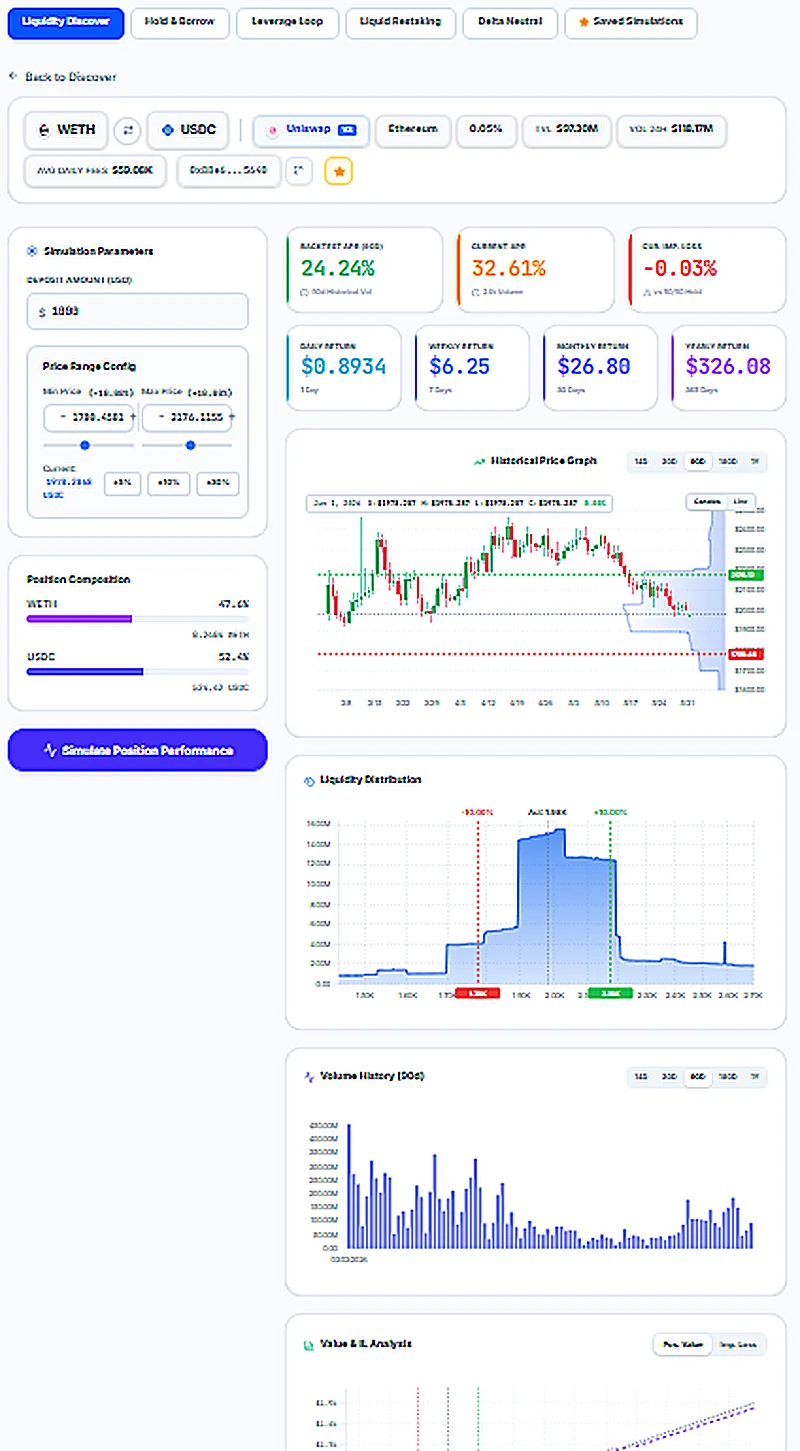
See how DeFiRiskSim models LP ranges, impermanent loss, LTV, health factor, leverage loops, restaking, hedges and vault risk across DeFi workflows.
DeFiRiskSim Team
Practical guides for modeling lending risk, LTV and health factor, LP ranges, impermanent loss, leverage loops, liquid restaking, hedges and vault exposure before using real capital.
Welcome to the DeFiRiskSim Research Hub. These guides support the simulator with plain-English explanations, practical checklists and strategy-specific risk notes. The focus is simple: understand the moving parts before you deposit, borrow, loop, hedge or allocate to a vault.
To explore a specific risk profile, start with the closest simulator module:
For a coverage map across DEXs, lending markets, LRT assets, hedge venues and vault workflows, see supported DeFi protocols and risk models.
See how DeFiRiskSim models LP ranges, impermanent loss, LTV, health factor, leverage loops, restaking, hedges and vault risk across DeFi workflows.
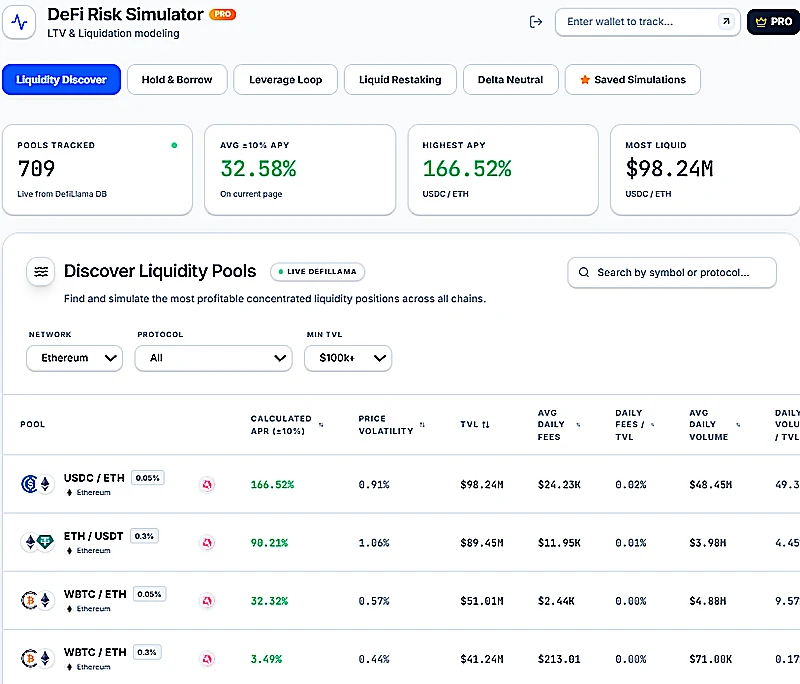
Compare Uniswap V3, Uniswap V4, PancakeSwap V3 and Aerodrome Slipstream by LP ranges, hooks, fee tiers, incentives and risk modeling.
Learn the impermanent loss formula, when stablecoin pools reduce IL, why concentrated liquidity changes the risk and when fees may offset LP losses.
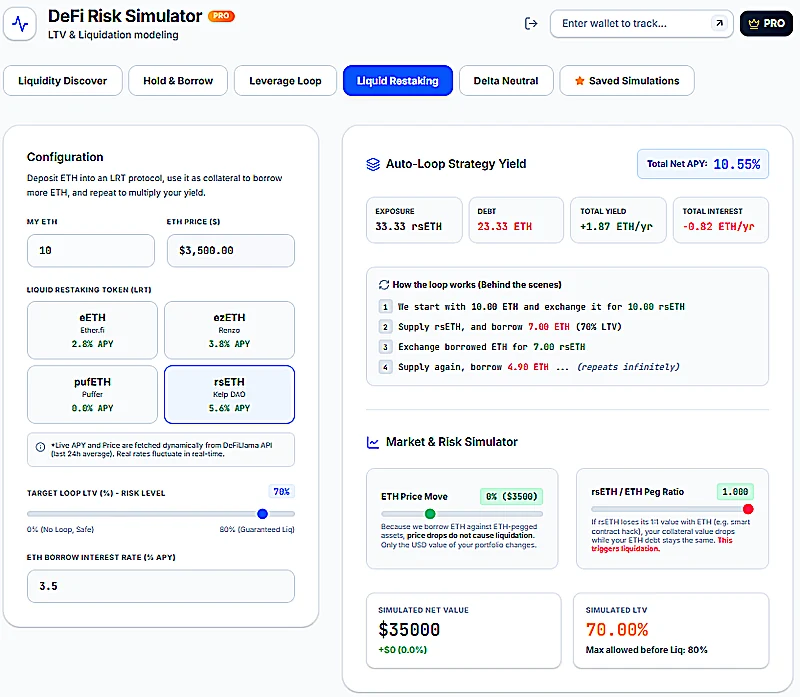
Model liquid restaking token loops with LRT collateral, borrow APY, depeg stress, health factor, leverage limits and liquidation paths.
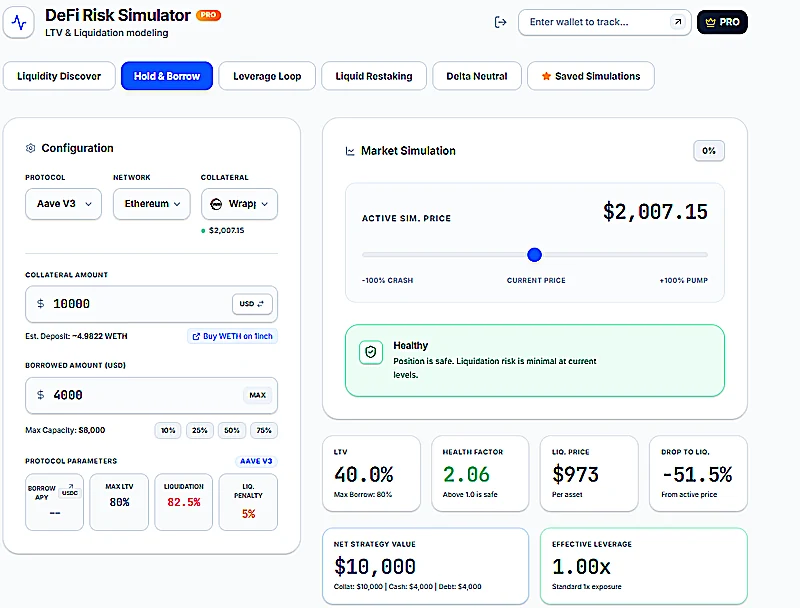
Learn how LTV, health factor, liquidation threshold, borrow APY and collateral drawdown interact across Aave-style and Morpho-style lending positions.
Choose LP ranges with fee tier, volatility, impermanent loss, active liquidity time and out-of-range risk before opening a Uniswap V3-style position.
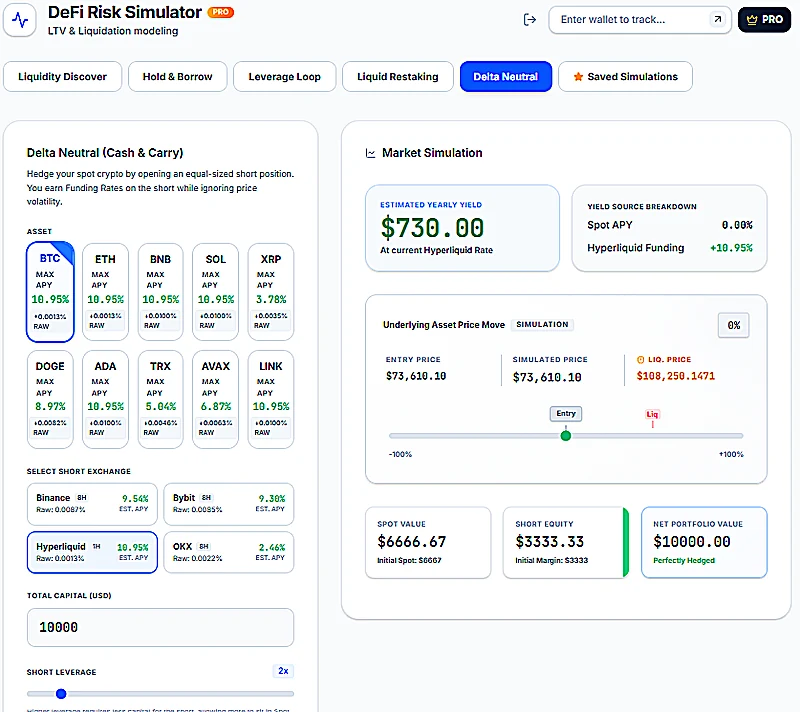
Understand hedge ratio, funding, basis, margin pressure and short liquidation risk before using a delta-neutral crypto strategy.
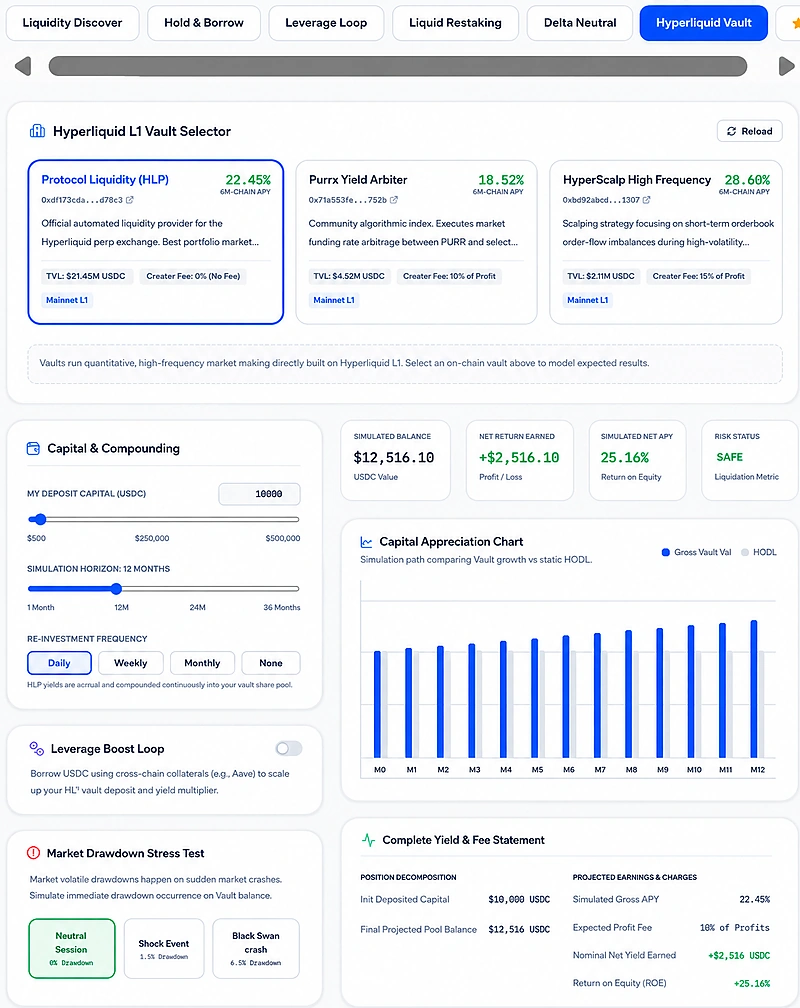
Evaluate HLP-style vault risk, leader fees, net depositor return, withdrawal timing, volume assumptions and drawdown before allocating capital.