DeFi Risk Simulator for
Lending, LPs, Leverage & Vaults
Model LTV and health factor, LP ranges, leverage loops, liquid restaking, delta-neutral hedges and Hyperliquid vault exposure before committing capital.
See everything before you invest.
Real market data, structured mathematical modeling, and transparent assumptions. Here is exactly what you get inside the workspace suite.
Live Market Discovery
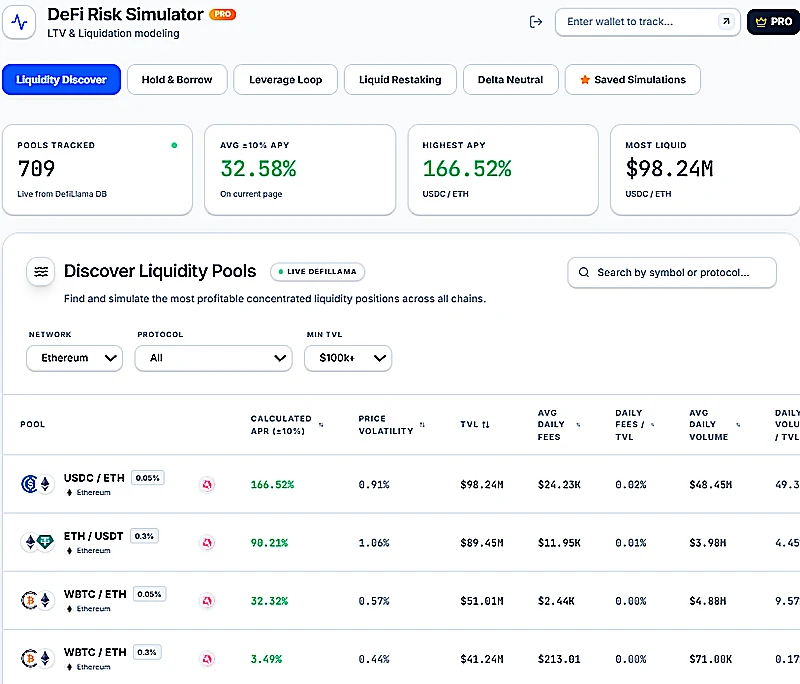
Find liquidity pools across supported chains and compare TVL, volume, fee tiers and simulator readiness before choosing which market deserves deeper modeling.
Concentrated Liquidity
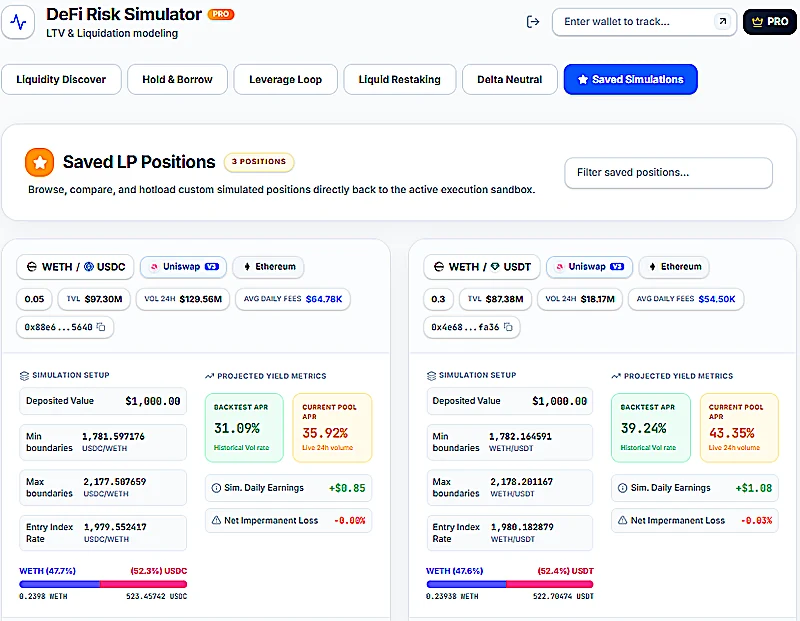
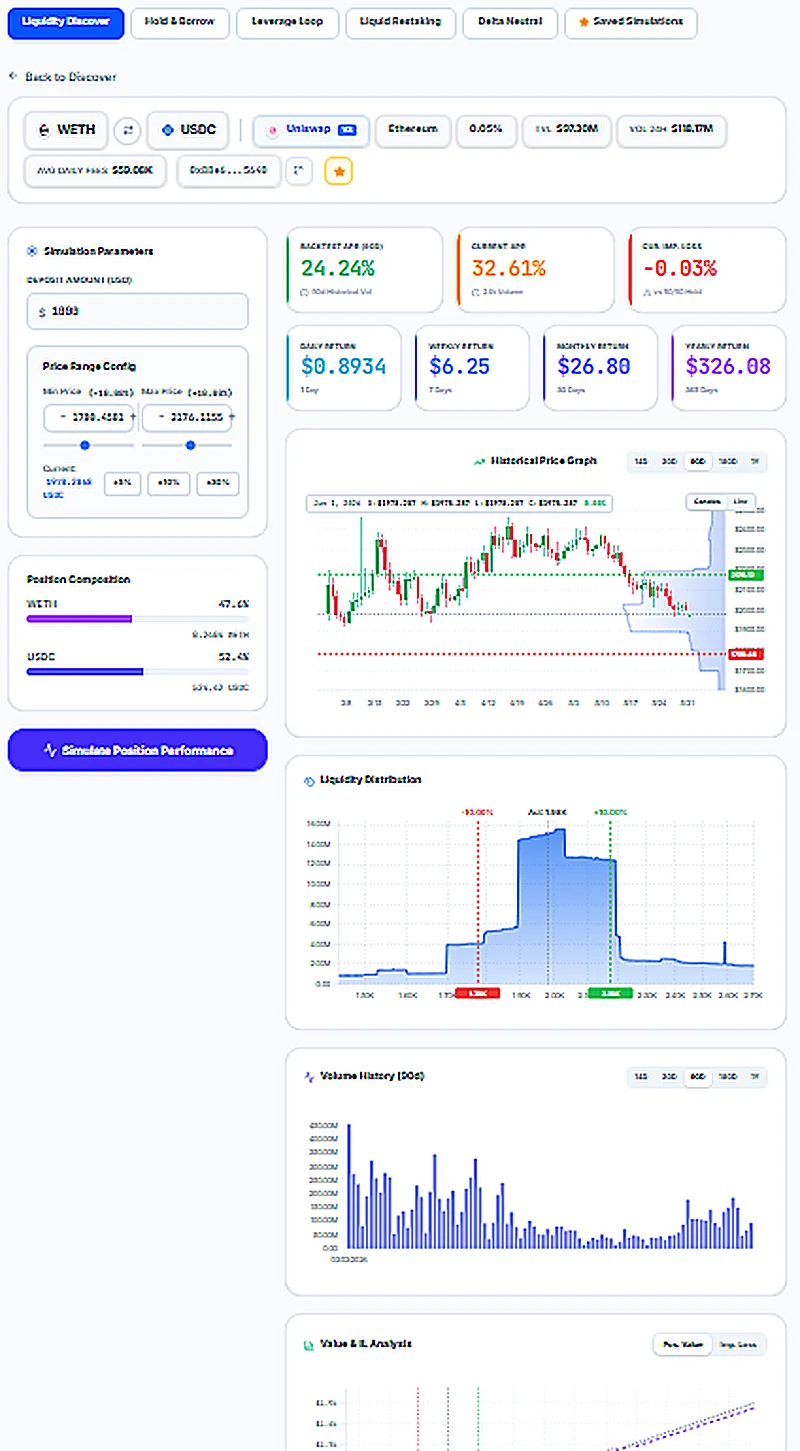
Test price ranges for Uniswap V3/V4, PancakeSwap V3 and Aerodrome-style pools. Compare active liquidity, fee assumptions, token exposure and impermanent loss scenarios.
Hold & Borrow Modeler
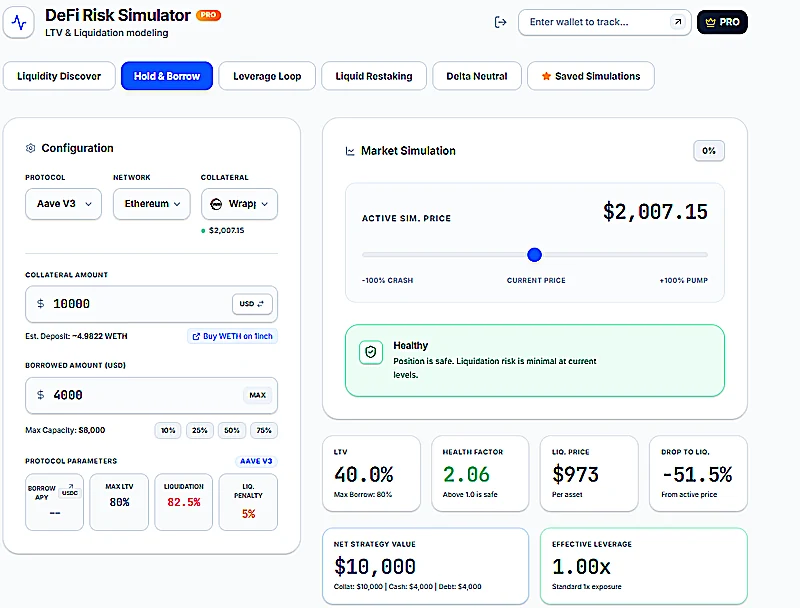
Model borrowing against crypto collateral. Compare LTV, health factor, borrow cost, liquidation threshold, estimated liquidation price and price-move scenarios.
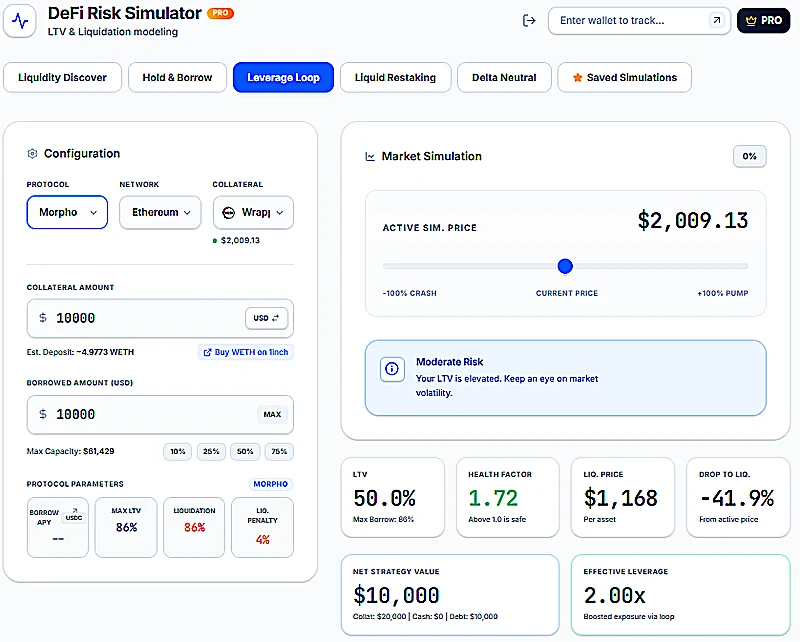
Leverage Loop Simulator
Model recursive borrowing by depositing, borrowing and re-depositing. Keep collateral, debt, leverage, borrow cost and liquidation risk visible in one scenario.
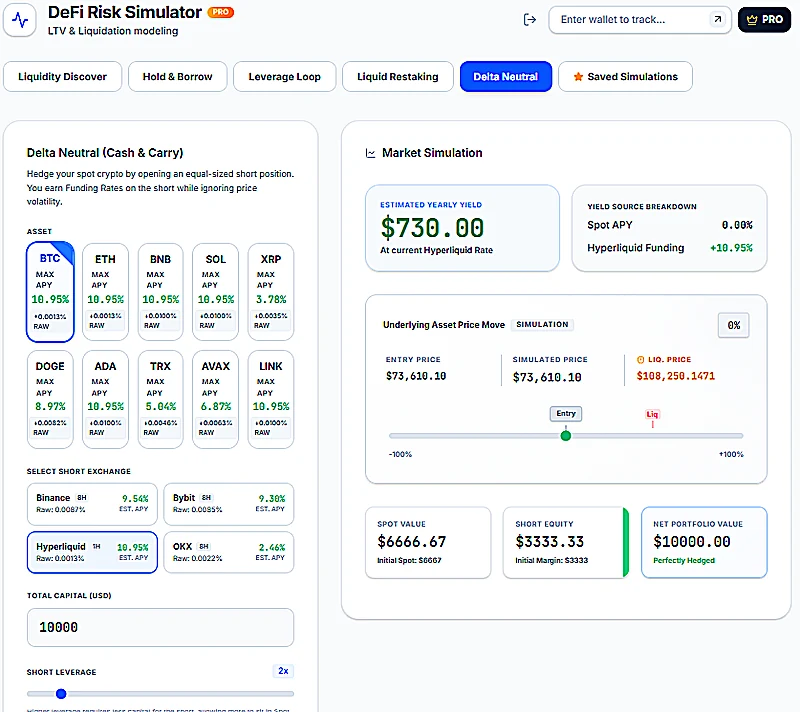
Delta Neutral (Cash & Carry)
Model spot, LP and perpetual hedge assumptions together. Compare hedge size, funding, margin pressure and price-move scenarios without treating the hedge as risk-free.
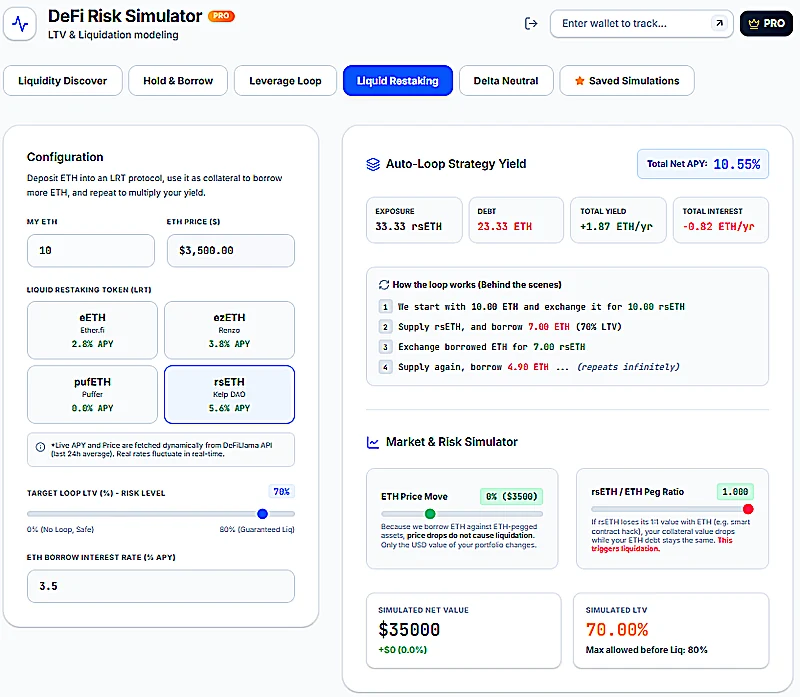
Liquid Restaking Looper
Model LRT loop scenarios with restaking assets, borrow cost, leverage, depeg stress and liquidation risk before increasing exposure.
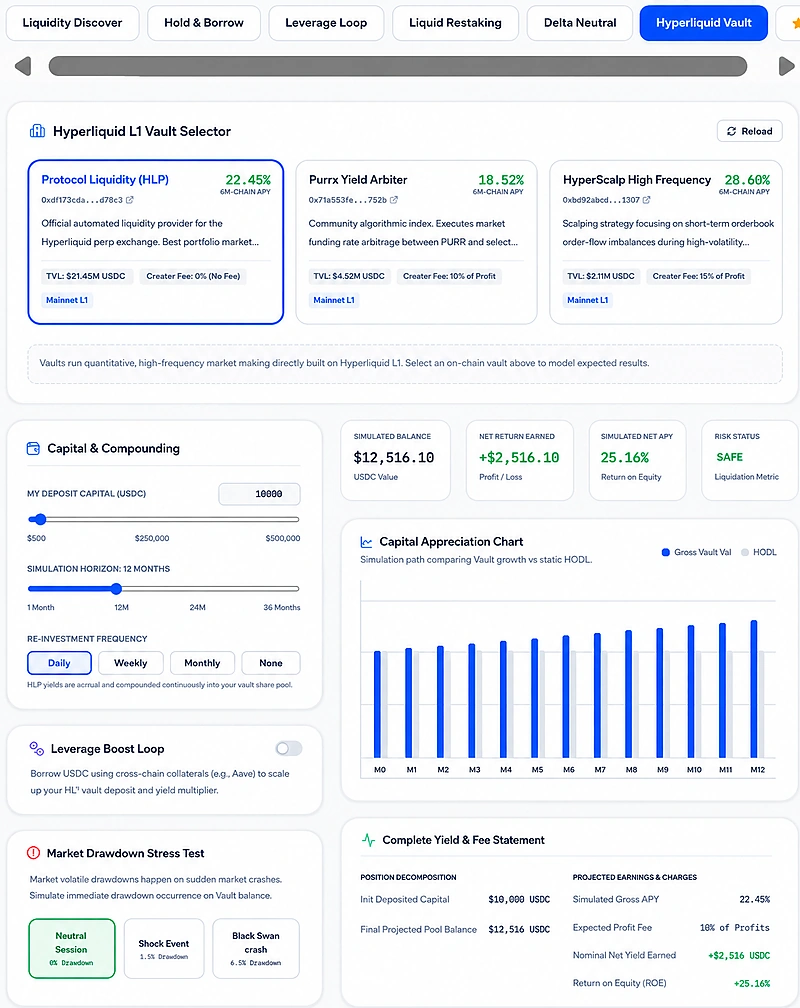
Hyperliquid L1 Vaults
Model Hyperliquid vault exposure with return assumptions, fee impact, volume scenarios, compounding and drawdown risk before allocating capital.
Master Your Strategy in 3 Steps
Choose Workflow
Start with LP range, borrowing, leverage loop, restaking, hedge or vault exposure.
Set Assumptions
Enter prices, ranges, LTV, fees, funding, borrow cost or drawdown inputs.
Compare Risk
Review health factor, impermanent loss, net return, liquidation distance and downside cases.
Frequently Asked Questions
Core Mechanisms & Analytics
Advanced Strategies
Explore the simulator. Start optimizing.
Make data-driven DeFi decisions based on structured mathematical modeling. Explore liquidity ranges, hedging paths, and pool risk scenarios.